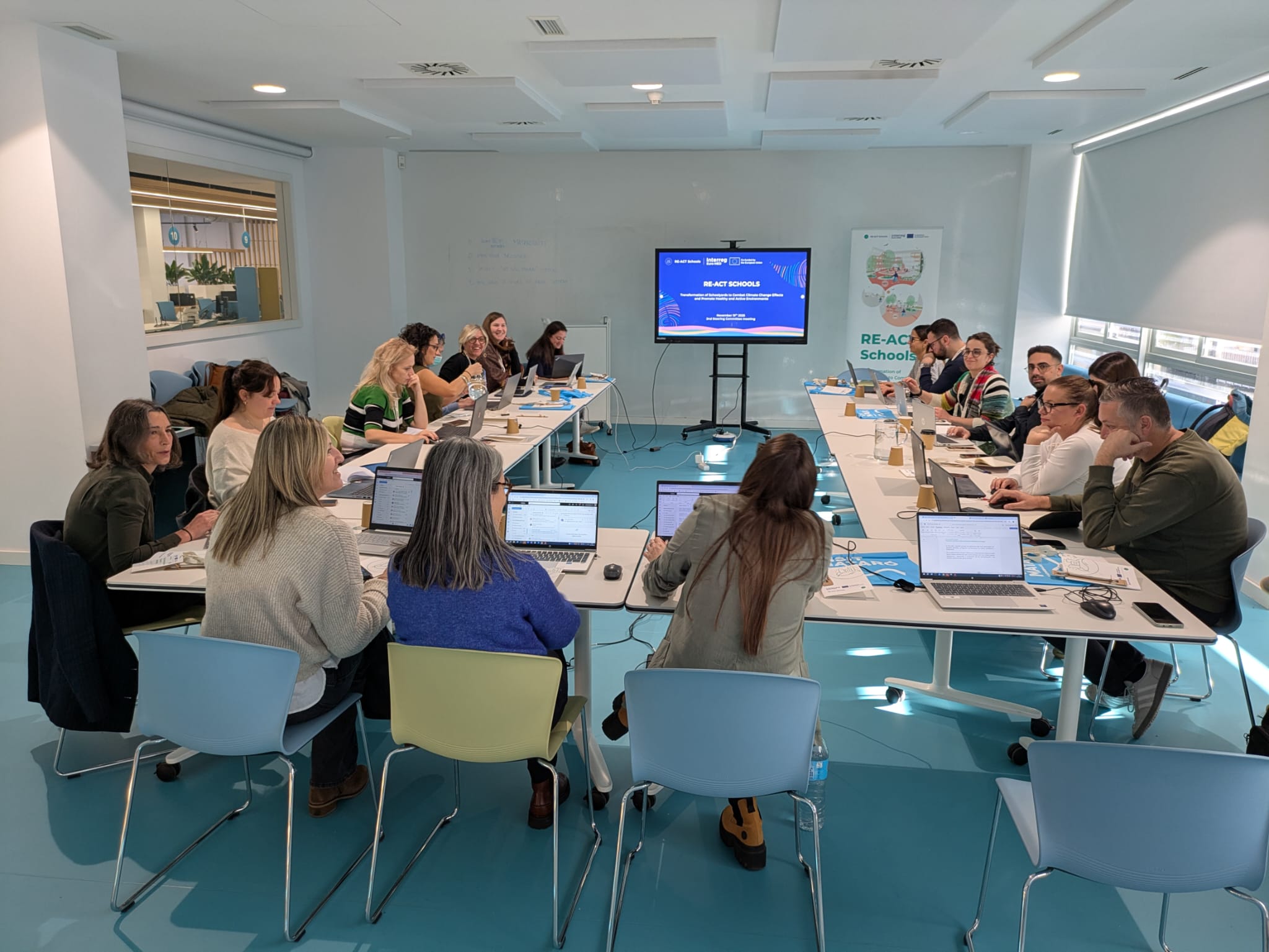
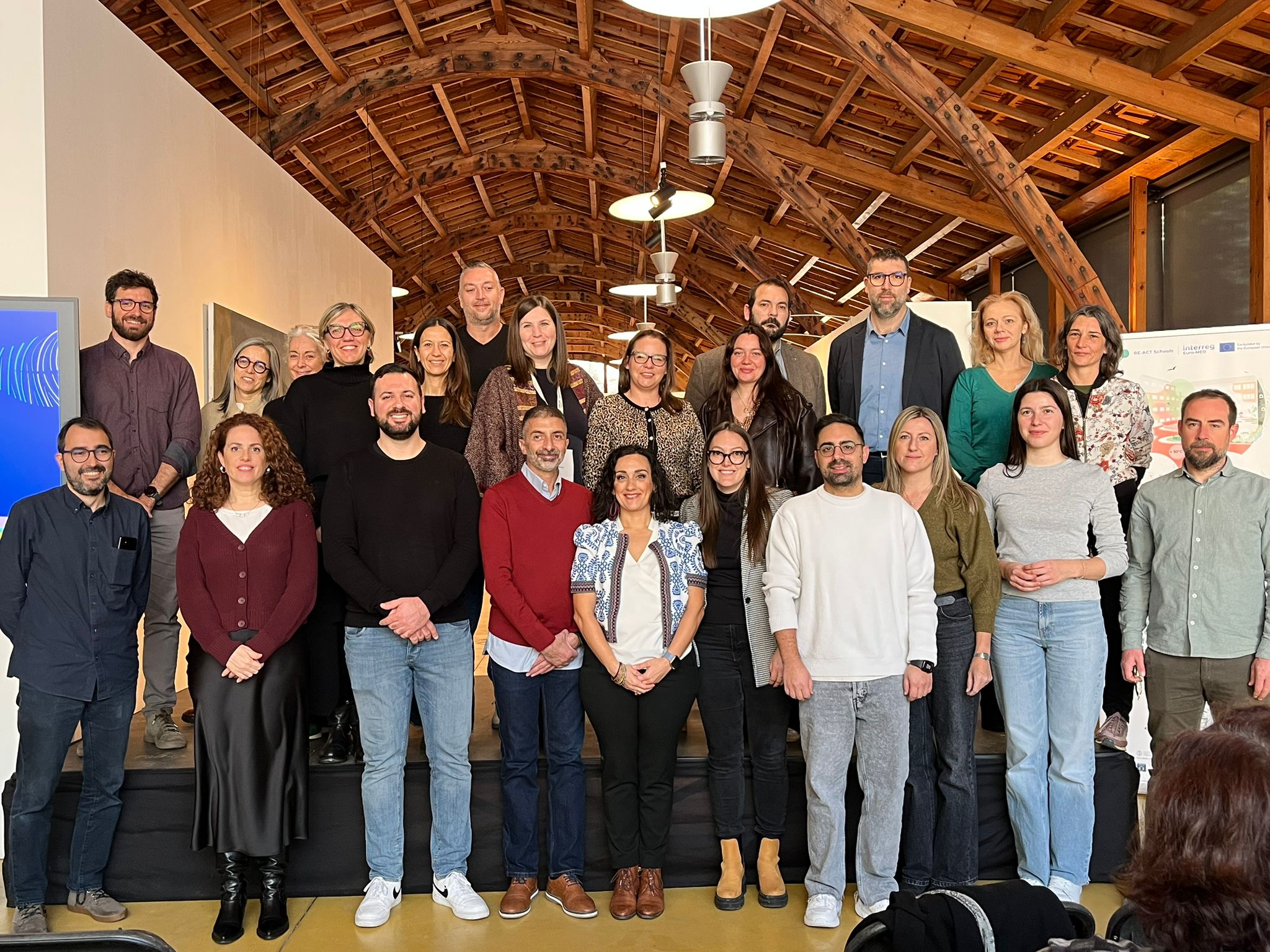
Within the framework of the RE-ACT School Project – “Transformation of Schoolyards to Combat Climate Change Effects and Promote Healthy and Active Environments”, the city of Mataró hosts the 2nd Interregional Thematic Workshop (ITW). The event combined a project Steering Committee, a public thematic workshop on urban heat mitigation, and a RE-ACT Schools Conference focusing on nature-based solutions and healthier school environments.
📌 Thursday, 20 November — Thematic Workshop: Mitigating Urban Heat Island Effect
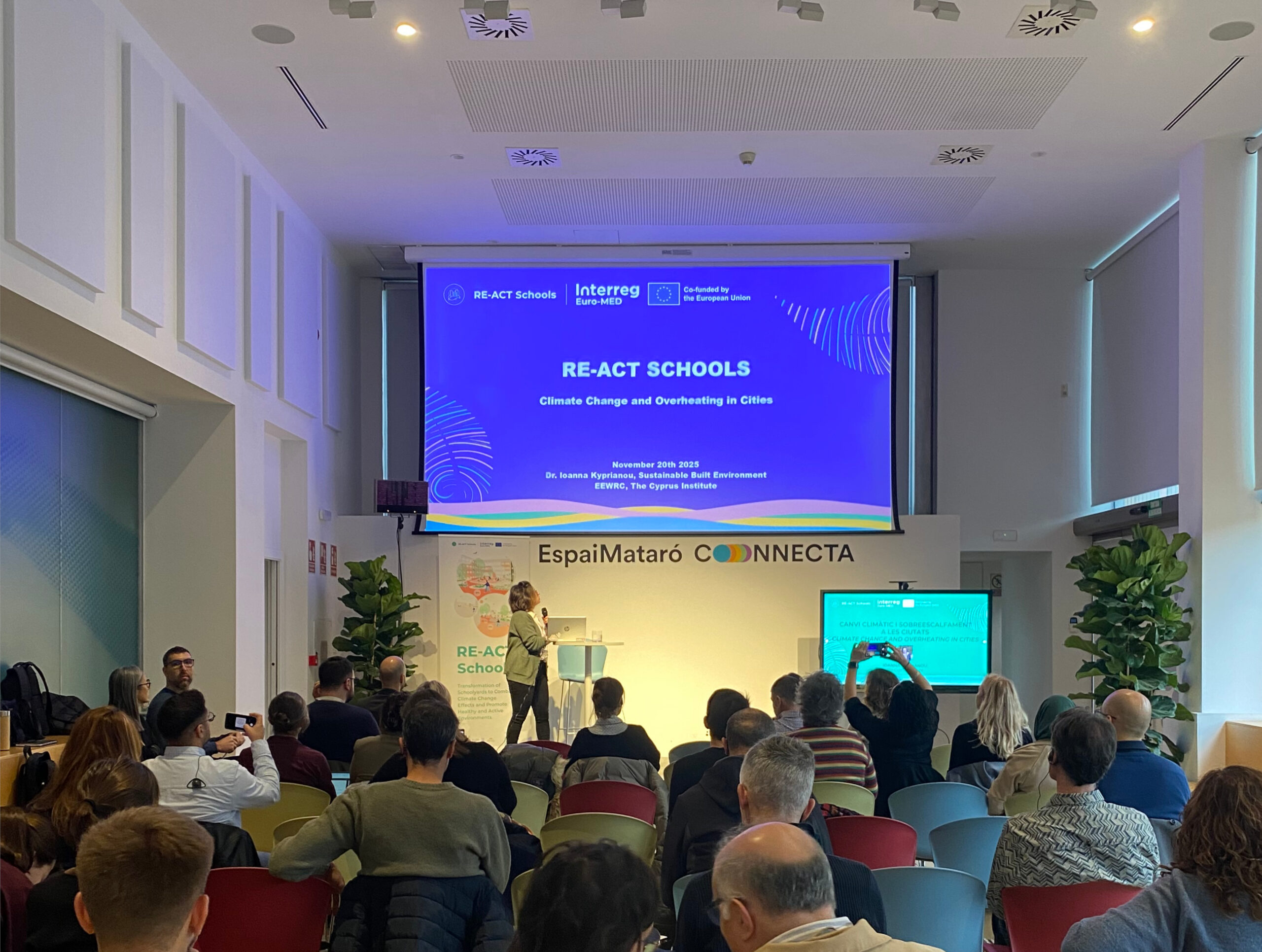
The second day was open to partners, local stakeholders, and the public. The workshop focused on understanding and addressing the urban heat island (UHI) effect and the role of nature-based solutions in school environments.
The morning session, hosted again at Espai Mataró Connecta, featured:
- Dr. Ioanna Kyprianou (Cyprus Institute): climate change trends and urban overheating challenges.
- Mònica Ubalde (ISGlobal): health impacts—especially on children—and the protective effects of green and blue infrastructure in schools.
- Mariona Ferràndiz (Replantegem / CREAF): practical nature-based strategies to cool cities and improve well-being.
- Marta Rofin (Healthy Cities): The City as a Health Tool: The Transformative Potential of Schoolyards
- Mamen Artero (The Green Balloon): Why and How to Re-Naturalize Schools
- Andoni Briones (Paris City Council): Resilient Paris
In the afternoon, participants visited real examples of nature-based interventions within the city, as part of Re-Natura Mataró, exploring how these solutions can be transferred and adapted to schools.
📌 Friday, 21 November — RE-ACT Schools Conference
The final day took place at the iconic Nau Gaudí. It was dedicated to broader reflections on urban resilience, public policy, and educational transformation.
The programme included:
- Dr. Cecil Konijnendijk (Nature Based Solutions Institute): keynote presentation introducing the widely recognised 3-30-300 rule for greener, healthier urban environments.
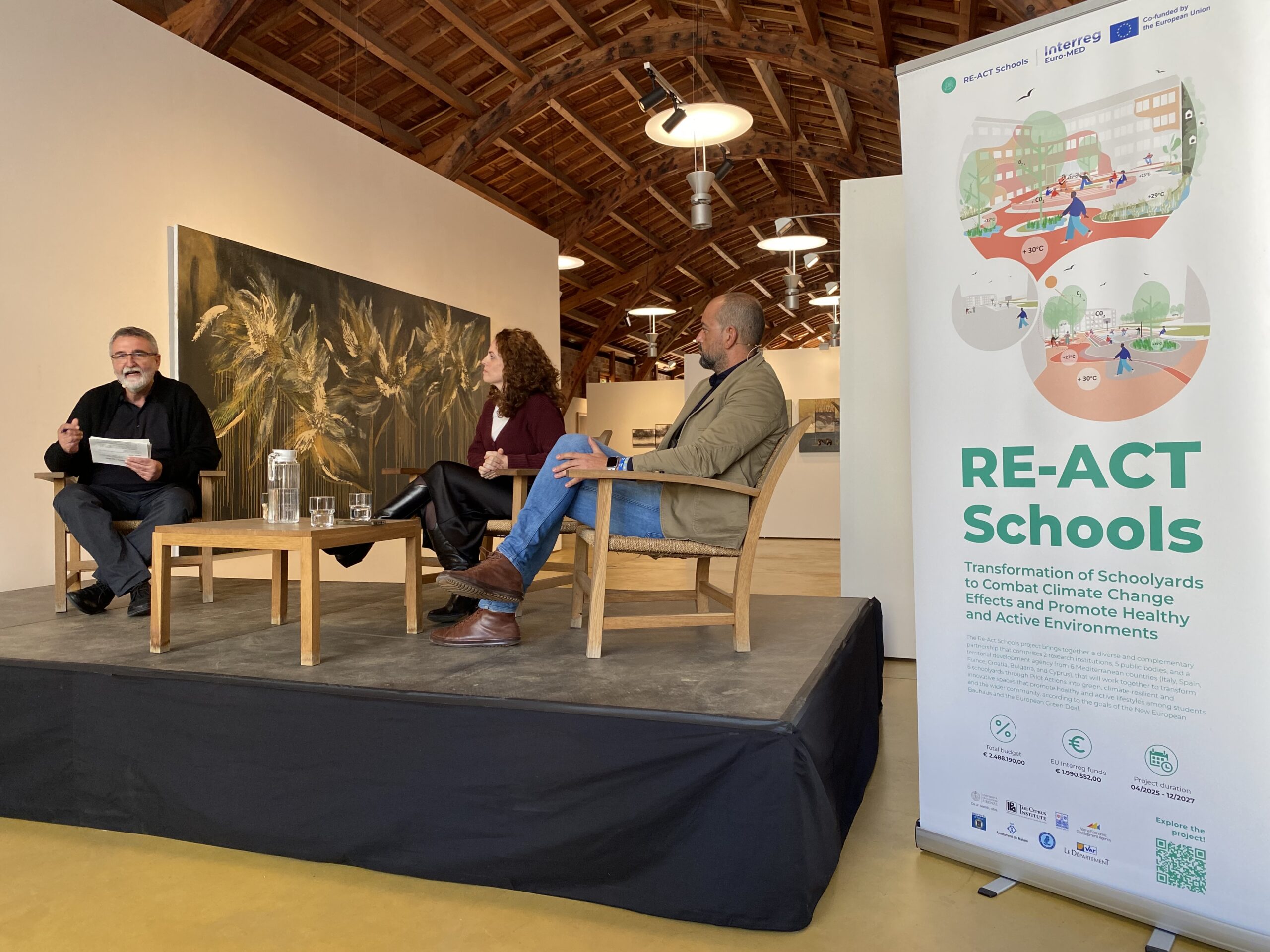
- Roundtable hosted by the Mataró City Council and the Barcelona Provincial Council: discussion on the city’s Green Infrastructure Master Plan and the strategic role of schools as community climate-action hubs.
- Closing remarks followed by a light networking lunch for partners.
💡 Highlights
- The meeting combined scientific expertise, municipal strategy, and hands-on school transformation, ensuring a multidisciplinary approach.
- Sharing experiences from the six pilot sites helped partners refine their designs, monitoring plans, and stakeholder engagement strategies.
- The workshop strengthened connections between education, urban planning, public health, and climate resilience, highlighting the value of schoolyards as both learning spaces and climate-adaptation infrastructures.
All presentations are available for free download on the RE-ACT Schools website by clicking on the highlighted text.
📍 In this direction, the next 3rd Interregional Meeting will take place in May–June 2026 in Var (France), focusing on “Water Management for Climate Resilience”, a central theme as schools and cities confront increasing droughts, heavy rainfall, and water-related climate risks. 🌍💚